ICSSH2026

2026 12th International Conference on Social Sciences and Humanities

Conference Date: May 21-23, 2026Location: Suzhou, China

Website: http://www.icssh.net/2026/05/en/home

Keynote Speakers

The information about the Keynote Speakers of ICSSH2026 is as follows, which will be updated regularly.
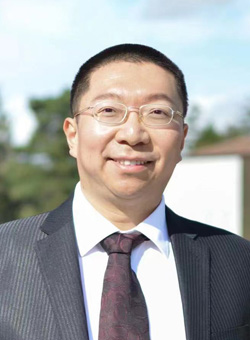
Dr. Hung Keung, Professor

Department of Cultural and Creative Arts, The Education University of Hong Kong, Hong Kong Special Administrative Region, China

Biography

Dr. Hung Keung is a Professor in the Department of Cultural and Creative Arts of The Education University of Hong Kong. Professor Hung Keung is an internationally renowned digital media artist, researcher, scholar and designer. He graduated from the Swire School of Design at The Hong Kong Polytechnic University and the Department of Fine Arts at The Chinese University of Hong Kong. Later, he pursued further studies in film and video at Central Saint Martins College of Art and Design, University of the Arts London, where he obtained a master's degree. He then earned a doctoral degree from the Planetary Collegium, Zurich University of the Arts, Zurich, Switzerland and the University of Plymouth. Professor Hung Keung has served as a visiting scholar, artist, and guest lecturer at various international universities, including the Zentrum für Kunst und Medientechnologie, Germany (2001-2002), Kolding Design College, Denmark (2002), University of California Berkeley, USA (2006), the University of Oregon (2011), the Australian National University (2015), Western University, Canada (2019), and the University of Hawai'i (2022). He has been engaged in cultural and academic exchanges and promotion activities, involving research, creation, and exhibitions in different fields and interdisciplinary media art.

Topic

Embodied Heritage in the Digital Age: Reimagining the Transmission of Tai Chi through Visual Semiotics, VR Technology, and Data-Driven Pedagogy

Abstract

In the current educational landscape, the preservation and transmission of Intangible Cultural Heritage (ICH) face a critical inflection point. Traditional somatic practices, such as Tai Chi, rely heavily on "embodied knowledge"—a depth of physical and philosophical understanding that is becoming increasingly difficult to transmit to a digital-native generation through conventional master-disciple models. This keynote address proposes a pioneering framework for the digital evolution of cultural heritage, drawing upon the ongoing research project "Tai Chi and Chinese Martial Arts VR 2.0." The core of this research posits that technology should not merely record tradition but must actively restructure how "embodied knowledge" is visualized and internalized. I will introduce an interdisciplinary approach that converges Visual Semiotics, Generative AI, and Virtual Reality (VR). A central innovation of this study is the development of "Novel Typefaces: Tai Chi Compound Characters" (複合字). By applying semiotic principles to typographic design, we have created a visual system that encodes the spatial dynamics of martial arts directly into text, effectively bridging the cognitive gap between abstract theory and physical movement. Crucially, this presentation moves beyond theoretical modeling to present empirical findings from recent school-based fieldwork. Our research team implemented a dual-track curriculum in local schools, teaching students to navigate Tai Chi through both traditional instruction and our "Novel Typefaces." I will present quantitative and qualitative data collected from these classroom interventions, analyzing how these semiotic tools impact student learning curves, form retention, and cultural engagement. The findings indicate that when students deconstruct Tai Chi through these innovative compound characters before engaging with the Immersive VR Training Program, their acquisition of the forms is significantly accelerated. By synthesizing the theoretical lens of "Embodied Heritage" with rigorous school-based data, this address demonstrates how the fusion of artistic typography and advanced VR/AI technology can create a scalable, verifiable pedagogy—ensuring that the ancient wisdom of Tai Chi remains not only preserved but pedagogically vital for future generations.

Dr. Pravesh Kumar Srivastava, Professor

Department of Ancient Indian History, Culture & Archaeology, Banaras Hindu University (BHU), Varanasi, India

Biography

Dr. Pravesh Kumar Srivastava is a Senior Professor of Ancient Indian History, Culture and Archaeology at Banaras Hindu University, India. His scholarship focuses on Indian historiography, colonial Indology, religious history, and the reinterpretation of India’s ancient past from indigenous intellectual traditions. He has published widely on the impact of European scholarship on Indian history and is currently engaged in international projects examining the global construction of Asian civilizations.

Topic

Rewriting Asia’s Ancient Past: Indian and Chinese Civilizations Beyond Colonial Historiography

Abstract

Asia’s great civilisations—particularly India and China—possess some of the world’s oldest and most sophisticated intellectual, religious, and cultural traditions. Yet the way these civilisations are studied, represented, and taught in modern academia has been deeply shaped by European colonial scholarship of the nineteenth and early twentieth centuries. Colonial Indology and Sinology did not merely interpret Asia; they actively re-constructed it through Western conceptual categories, philological priorities, and imperial political interests. As a result, many indigenous historical frameworks, knowledge systems, and civilisational self-understandings were marginalised or distorted. This keynote proposes a critical re-examination of how Asia’s ancient past was written under colonial conditions and how India and China can now reclaim their historical narratives on indigenous and intercultural foundations. Drawing upon Indian historiographical traditions, Sanskritic sources, Buddhist transmission networks, and the long history of India–China intellectual exchange, the paper argues that Asia was not a passive object of Western knowledge, but a self-generating world of ideas, institutions, and civilisational logics. By comparing the colonial construction of Indian and Chinese histories with pre-modern Asian modes of recording, transmitting, and interpreting the past, the lecture highlights the need for a new Asian-centred historiography. Such a framework does not reject global scholarship, but re-anchors it in Asian epistemologies, languages, and cultural memories. In an era when Asia is reasserting its intellectual and geopolitical presence, rewriting its own ancient history is not merely an academic exercise—it is a civilisational necessity. India and China, as two of the world’s oldest living civilisations, have a shared responsibility to lead this historiographical renewal.

conference123 is an international academic communication platform, that facilitates high-level symposiums and fostering innovation. It serves as a platform for academic conferences, bringing together experts and scholars worldwide to exchange research findings.

Contact Us

Copyright © 2015- Shanghai Laixi Conference Services Co., Ltd. All rights reserved. 沪ICP备16000615号-1

沪公网安备 31010702005022号
