Conference participants who bear a foreign passport may need to apply for a Chinese visa to visit China. Participants can apply for a visa at the Chinese embassy or consulate in the region where they live. To avoid any uncertainty, participants are advised to apply for the visa as early as possible, at least one month in advance.
For most attendees, it is easier to apply for a Tourist ("L") visa.
* For more information, please contact the local Chinese Embassy in your country.
The 240-hour visa-free transit is one of China’s visa exemption policies provided to eligible foreigners coming from selected countries.
Under the 240-hour visa-free transit policy, foreign travelers can enjoy a ten-day stay in certain Chinese cities without a visa, provided they come from 57 eligible countries, enter and exit China from eligible ports, stay within the allowed cities and regions, as well as satisfy other requirements.
The applicant must be a citizen of one of the following 57 countries that are eligible for the visa-free transit policy:
To know more details, please visit: https://en.nia.gov.cn/n147418/n147463/c183412/content.html
Xiamen (厦门) is an important gateway city on the southeast coast of China, renowned as a "Garden on the Sea." It is one of the core areas of Minnan (Southern Fujian) culture and served as a vital hub of the ancient Maritime Silk Road, witnessing China's modern journey of openness and integration. Famous for its unique layout of city and sea—"a city on the sea, and the sea in the city". Xiamen combines the charm of overseas Chinese heritage, exotic architecture, and coastal scenery, which has attracted countless tourists.
Here is the tourism route:
Kulangsu (鼓浪屿) --- Xiamen Botanical Garden (厦门园林植物园) --- Shapowei (沙坡尾)
Kulangsu (鼓浪屿)
Kulangsu, located off the southwestern coast of Xiamen, is a national-level scenic area spanning less than two square kilometers. Named after a reef on its southwest beach that emits a drum-like sound when struck by waves, the island is often called the “Garden on the Sea” for its year-round greenery and floral charm. As a UNESCO World Heritage Site inscribed in 2017, it preserves over a thousand historic buildings ranging from traditional Fujianese courtyards to Gothic and Baroque Western structures, earning it the title of “Museum of World Architecture.” Additionally, renowned as the “Island of Pianos,” it once had the highest piano density in China and has nurtured many celebrated musicians. Gulangyu harmoniously blends natural beauty, rich history, and architectural diversity.
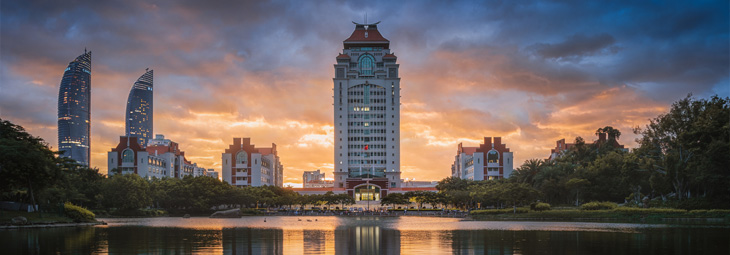
Figure 1: Kulangsu (鼓浪屿)
Xiamen Botanical Garden (厦门园林植物园)
Xiamen Botanical Garden is a national botanical garden combining plant research, education, and tourism. Covering an area of approximately 4.93 square kilometers, it houses over 7,000 tropical and subtropical plant species. The garden features two signature attractions: the Desert Plant Zone, showcasing a striking variety of cacti and succulents that create a landscape reminiscent of the desert, and the Rainforest World, where an artificial mist system evokes the enchanting atmosphere of a tropical jungle. Established in 1960, the garden harmonizes natural mountain and water scenery with artistic landscaping, earning it the title of a "green jewel within the city."
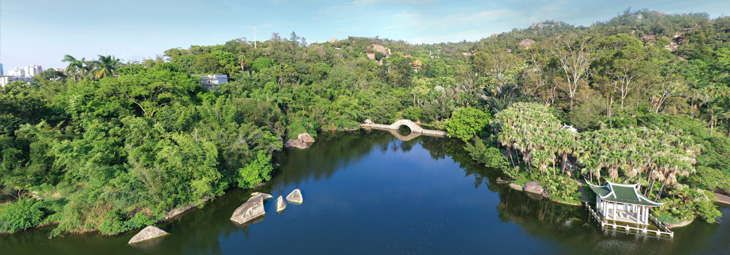
Figure 2: Xiamen Botanical Garden (厦门园林植物园)
Shapowei (沙坡尾)
Shapowei, on the southwestern coast of Xiamen Island near Xiamen University, is the birthplace of the city’s port culture. Once a Ming Dynasty-era typhoon shelter and Xiamen’s only fishing harbor, it has transformed into a vibrant cultural district. Traditional Minnan Qi Lou buildings now coexist with art spaces, independent cafes, and old workshops. Blending vintage charm with youthful creativity, Shapowei retains its authentic local spirit while embracing modern trends, serving as a unique cultural window connecting Xiamen’s past and present.
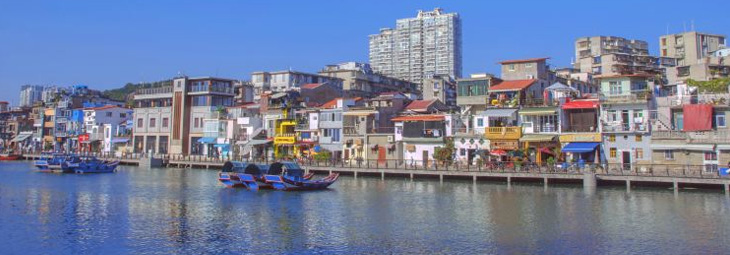
Figure 3: Shapowei (沙坡尾)
Download
Countdown to Submission Deadline
DAY
HRS
MIN
SEC

Submission Deadline
Extended to Nov. 10, 2026
Conference Date
Dec. 10-12, 2026

conference123 is an international academic communication platform, that facilitates high-level symposiums and fostering innovation. It serves as a platform for academic conferences, bringing together experts and scholars worldwide to exchange research findings.
Participation Guidelines
Contact Us
Email: contact@conference123.net
Cell Phone: 0086-18616502321
0086-18621626037
|
Address: |
11th Floor, Block B, Pinzun International Center, No. 567, Langao Road, Putuo District, Shanghai |

沪公网安备 31010702005022号
 Login
Login


 X (formerly Twitter)
 Linkedin